
It’s late July, and your tomato plants have turned into an absolute jungle! We’re gardening in Georgia, which means we’ve got several more months of our summer growing season! The best way to utilize those extra weeks is by pruning your tomatoes now. This will strengthen the stems, keep them healthy, and boost your fruit production!
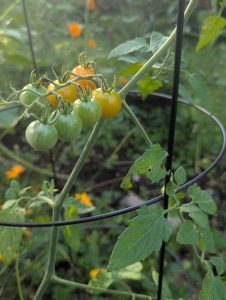
Tomatoes tend to produce lots of leaves and fewer fruits, but balancing leaf and fruit production by pruning tomato plants is easy! A tomato variety is classified as either determinate or indeterminate. Determinant tomatoes can grow 4 or 5 feet tall, then they stop growing and begin producing fruit. All fruit on a determinate tomato plant ripens at the same time within about 4 to 6 weeks. Some determinate varieties we’ve carried include Roma, Beefsteak, Tiny Tim, and Celebrity. Many “Bush” tomatoes are determinate.
Indeterminate tomatoes don’t stop growing at a defined height. Instead, they continue to put on new foliage, flowers, and fruit until frost. In Woodstock, this year’s first frost estimate is November 5th, giving us loads of time for fresh ‘maters. Indeterminate tomatoes benefit most from pruning to remove excess foliage, but pruning boosts the production of determinate tomatoes, too. Because of our long growing season, indeterminate varieties are popular in the south. Some that we’ve carried include Brandywine, Sweet 100, Juliet, Cherokee Purple, and Sungold. If you’re not sure if a particular variety is determinate or indeterminate, a quick Google search of the name can sort it out!
Now that you know what type of tomatoes you’re pruning, let’s get to it! Start by wiping down your pruners with an alcohol mix to sanitize them. Repeat this step between plants to avoid spreading disease. Next, start by removing the lower leaves; clearing the first 4-6 inches from the base is a safe bet. This helps avoid issues that can be caused by soil splashing up when the plants are watered. Suckers are your next hurdle to tackle. These will be shoots that are growing between the main stalk and the secondary shoots. Pinching the suckers will help focus the plant’s energy on fruit production as well as help open up the air flow and light to the lower leaves. This is a good time to look at your trellising system. Are your stems properly supported or likely to snap if they produce large fruit? If you have stems trailing along the ground, try and find a way to get them up or go ahead and remove them completely. If you are growing large slicing varieties, consider thinning out some of the fruit. With large tomatoes, focus on quality versus quantity; too many on one stalk can cause damage, and you may lose all of them.
Toss your healthy clippings into the compost, bag up and toss any diseased clippings or fruit into the trash, wipe down your pruners one last time, and go enjoy a well-deserved sweat tea on the porch as you admire your healthy, tidy tomatoes!
~ Elin Rose
