Designing a Cottage Garden: Tips, Do’s and Don’ts, and Plant Recommendations
How did Cottage Gardens come about? Cottage gardens stared out as utilitarian gardens where folks had small plots of land and grew vegetables, herbs and medicinal plants out of necessity. They often added flowers for beauty but more importantly to attract pollinators. Was thought put into the aesthetics of the gardens? Probably not. No one can say when this concept actually started, but it was pretty prevalent in towns all across Europe by the 1400’s
The look of a cottage garden has been romanticized in books and paintings for centuries, so it’s no wonder we dream of having our own cottage garden to enjoy.
What is a Cottage Garden? Probably the best way to define a cottage garden is by listing the characteristic often found in this style of gardening.
- Mixture of vegetables, herbs, flowering shrubs and lots of flowers planted in an informal style.
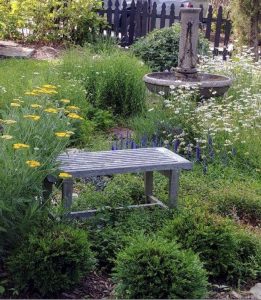
- An abundance of colors, plant heights and textures are incorporated throughout the garden.
- Often you see the color palette mainly being more soft pastels colors with pops of brighter more vibrant colors, This helps avoid a visual overload .
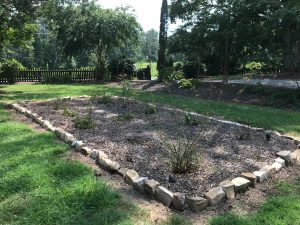
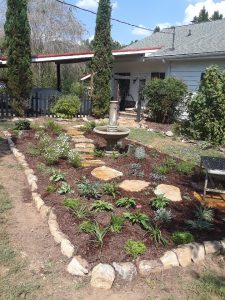
- Beds are curved and divided by informal paths often made of stone or brick
- Structures such as fences, gates, trellises, arbors and obelisks are often incorporated.
- Other garden accessories include benches, bird baths, fountains, and pottery to help add charm and personality.
Do’s when developing a Cottage Garden
- Layer your plants with taller plants in the back, with progressively shorter plants leading down to groundcovers as you approach the front of a bed. However rules can be broken and you can use a taller plant more in the center surrounded by smaller plants, think tree form hydrangea or a clematis growing on an obelisk.
- Do include edibles, such as small fruits, vegetables and herbs. Grapes, raspberries and blackberries can grow along a fence but be mindful of their spreading habits. These add beauty and functionality harkening back to the origins of cottage gardens
- Go vertical as a means to add additional color and interest. Thinks vines on building walls or encompassing an arbor or climbing a trellis. Of course small trees and large shrubs can be used also.
- Think about your other senses.
Add sound with wind chimes, or a fountain.
Bring movement with ornamental grasses and wispy stemmed perennials such as gaura.
Fragrance s can be enjoyed throughout the seasons with lilacs, gardenias, roses, honeysuckle and jasmine vines.
- Bring your garden alive by inviting animals to share your garden. Add plants that attract butterflies, bees, birds and hummingbirds.
- Curve your paths and bed lines. Paths can be mulch, gravel, stone or brick
- Informal doesn’t mean not planned. Work on keeping balance, and continuity throughout.
Don’ts when developing a Cottage Garden
- Don’t ignore your soil. Invest time and money into creating a soil for your plants that is nutrient rich and most importantly sustainable for worms and micro-organisms that will keep feeding your soil with nutrients.
- Don’t use overly aggressive spreading perennials unless you are allowing room for them to spread.
- Don’t over crowd your plants, allow room for plants to grow and spread.
- Don’t use plants that will require the use of chemicals. Remember you want a sustainable soil, grow edibles and attract wildlife and pollinators.
- Don’t forget you want your garden to have color and inertest spring summer fall, and hopefully winter too.
Tips when planning your garden
- Start small. Build confidence with successes and expand your garden over time. There will be failures, but that is part of gardening. Don’t get discouraged. Learn and move on.
- Create destinations both physically and visually. Physical destinations can be a bench, potting shed, arbor, gate or your front door. No straight lines here: curve that path. Visually a destination for the eyes may be a trellis tucked in a corner, or fountain or birdbath in surrounded by a sea of flowers. A six foott tall obelisk with a flowering clematis will surely catch one’s eye.
- If room allows you can create mystery and intrigue with a meandering path that leads around a hidden bend. Visitors will be drawn to see what is around the bend.
- Think vertically as a means to add color and interest. Sides of building, trellis, arbors. Of course small trees and large growing shrubs can be used also.
- Keep in mind the view from your house so you can enjoy your garden even when you are not in it.
- Create a list of goals. This would include specific plants or plant combinations you want to include, Physical elements like benches, bird baths etc. Senses you want to entice such as fragrances and movement or sound. Are you including pollinators for all the seasons? What about food for the birds? Refer to the list as you design so you can try to include everything you want.
- Define the boundaries of your garden. Use walls, fences, evergreen hedges to create borders or backdrops.
- Remember this is your garden, Do what pleases you. Follow the rules or break the rules, just have fun and learn as your go.
How do you start? This is the probably the hardest part for most of us. Where do we begin? Here is how I go about the process
- Lay out your bed(s) Sketch it out on paper with rough dimensions. Draw to scale if possible as this will make it easier when you start choosing plants. Note the direction of the Note what time of the day the bed receives sun and for about how long during the summer months.
- Start with deciding where larger structures or plants will go. Will you be working around an existing tree or one you want to plant?. That is going to dictate where surrounding plants go and what types plants they may be.
- Locate any sitting areas whether it’s a small patio or just a bench.
- Sketch out your path leading to the sitting area. Remember curves not straight A to B.
Thought this was hard? No hard is just about to start. Bring on the puzzle-Plant selection and location.
- Next consult your list of goals. Are all the structures, sitting area laid out? Things like pottery and bird baths may not be yet, but that okay. Anything like this left jot down near your drawing so you can quickly see it. Also jot down the names of any specific plants you want to make sure are included. By now you will also have a plant list but we will get to that shortly.
- Start at the back of your bed and the tallest plants you will be using. From your list of plants choose the plants you want to use. Draw circles reflecting the diameter of the plant as it matures. This is where drawing to scale helps. If you have means to do so with a computer it’s easier. Labe the plant in pencil. There will be a lot of erasing from here on out.
- Before going further. Look at your sitting area or bench if you have one. What would you like surrounding you? Do you want fragrances? Do you like the look of roses behind your bench? Draw them in? Make sure you are choosing a variety that is not too tall or large for the area. Or sketch in some low growing gardenias behind your bench.
- Now break out your plant list where you hopefully have your plants separated by heights and have noted their blooming season. Start choosing plants starting in front of the larger plants you already have drawn in. Will the combination work height wise? Do the colors of the foliages clash? If flowering time overlaps, colors should be contrasting (opposite each other on the color wheel) or complimentary (*next to each other on the color wheel). If so sketch them in. Okay will it be one plant? Three plants? Or more? This will depend on the size of the plant as it matures and how much room you have, and how busy o f a look you want? Label them, in pencil. Keep working your way through the bed. Add plants from your list asking each time does this selection meet the criteria set above? As you progress forward and lower the puzzle gets harder as each plant selection needs to work with the neighboring plant on all sides. Do not be afraid to back up and start with different plants in some areas.
- Besides colors and heights you should be considering textures. Are they varying enough to create interest? Also as you go stop frequently and review your bloom times. Are you covering all the seasons you want with color or interest? If everything seems to be blooming just in the spring, start replacing some of the puzzle pieces (plant selections) with a different variety. Hence the pencil or computer-easy changes.
- As you continue working the puzzle moving smaller and forward, keep consulting your list of goals. Keep looking back and make sure things will be blooming at different times. This is a lot of trial and error. And may still be even after you have planted.
- If you are working with multiple beds, you will do this with each bed, but now with an added challenge of maintaining balance and some continuity. Balance is visual weight. Trees and large shrubs add weight. If one side has a tree it doesn’t mean the other side has to also, but maybe a larger growing shrub to help maintain that balance. You create visual continuity by repeating some of the same plants in both beds. You can also create continuity with textures and colors even though they may not be the same plant.
- Consult the list of goals again. Can you check most or all of them off? Have you found homes for all the plants and elements you wanted to include? Once you are pretty satisfied with your plan, you can begin the physical work.
Creating a list of plants to consider. Keep in mind this list will be much longer that the list of plants you will actually use. As you create your list separate the plants by heights (small, medium and large), and note their blooming season or season of interest. Choose plants for our hardiness zone which is considered 7b to 8a.
Here are some plants to consider for a sunny cottage garden
Small trees: Japanese maples, smaller- growing crape myrtles, fringe tree, vitex, deciduous flowering magnolias
Shrubs : Hydrangeas, lilac, roses, spireas, abelias, camellias, larger looser-growing azaleas, butterfly bush, gardenia, loropetalum, small conifers for added textures, rosemary, lavender, beautyberry, clethra, caryoptris, bush clover
Vines: Climbing roses, clematis, honeysuckle, Madison Star jasmine,
Perennials: Asters, balloon flower. beebalm, coreopsis, daylilies, iris, coneflowers, scabiosa, veronica, holly hocks, foxglove, shasta daisy, penstemon, peony, gaura, salvia, blanket flower
Groundcovers: Thyme, thrift, ice plant, dianthus, ajuga, sedums
Grasses: Muhly , cassian, adagio, little kitten, blue fescue, feather
Annuals: Really just about any sun-loving annuals but the following blend well with a cottage look. Zinnia, cosmos, marigold, mexican petunias, salvia, lantana