
Compost Happens: A Beginner’s Guide to Letting Nature Do Its Thing
Let’s start with a simple truth: compost happens—whether you plan for it or not! That pile of leaves in the corner of the yard? The veggie scraps you toss? If left alone long enough, they’ll naturally break down and turn into something incredibly useful for your garden. That magic substance is called compost, and it’s basically man-made humus—the rich, earthy stuff you’ll find on the forest floor.
So, what exactly is compost? And how do you start making it without feeling overwhelmed? Let’s dig in.
What Is Organic Matter?
When we talk about composting, it all starts with organic matter—anything that was once alive. That includes things like:
Leaves and yard trimmings
Vegetable scraps and coffee grounds
Cotton fabric and paper
Even animal products (though with caution)
Just a note: in this context, “organic” doesn’t mean pesticide-free—it just means once living. So those Valentine’s Day roses? They’ll break down just fine, but keep in mind they might have been sprayed with all sorts of stuff.
How Composting Works
Composting is nature’s recycling system. Microorganisms like bacteria, fungi, and worms break down organic matter into smaller parts. The partially broken-down result is called humus, which:
Improves soil structure
Retains moisture
Balances pH
Feeds your plants
When we compost, we’re helping nature speed up that process.
Overwhelmed by Compost Rules? Don’t Be!
There are plenty of books and websites that go deep into composting formulas, ratios, and techniques. But guess what? You don’t have to be a compost scientist to get started.
Here’s the truth: there’s no one “right” way to compost. The best method is the one that works for you.
Here are some common choices:
No meat or dairy. Though some people add small amounts, large amounts can invite pests and smells.
Green-to-brown ratio? A good rule of thumb is 1 part greens (veggie scraps, grass clippings) to 2–4 parts browns (leaves, cardboard), but some folks don’t measure at all.
Hot composting vs. lazy composting? Turning your pile speeds things up and kills weed seeds, but you can also just let it sit and do its thing.
How to Get Started
Pick your style: Scientific, structured, or laid-back and low-effort—there’s no wrong answer.
Start collecting scraps: Use a small kitchen bin and try to empty it daily to avoid smells.
Choose a compost spot: Sunlight helps speed things up. Moisture helps too. Soil contact invites helpful microbes. A lid can keep critters out.
Add stuff: Toss in your scraps, add some leaves or paper, and you’re officially composting!
How Long Does It Take?
It depends—on the weather, on what you put in, and how often (or if) you turn it. Chopping things smaller and keeping the pile moist will help speed things along.
Using Your Compost
Once it’s broken down into a dark, crumbly, earthy-smelling material, it’s time to use it! Here’s how:
Mix it into soil when planting (don’t plant directly into compost—it’s too rich and not structured enough on its own).
Top-dress garden beds or containers with an inch or so to give plants a boost.
Make compost tea: Fill half a bucket with compost, top with water, stir daily for a few days, and use as a liquid fertilizer.
Use compost while it’s still slightly moist—like a wrung-out sponge—for best microbial activity. Even dry compost still improves soil structure, but the beneficial bugs won’t be as active.
Other Composting Options
Not into the classic pile? Here are some fun alternatives:
Vermicomposting: Use red wigglers in a worm bin! They’re great for indoors (but don’t freeze), and kids love them. Just avoid spicy scraps and citrus.
Bokashi Buckets: Ferment your food scraps—including meat and dairy—using special bran and a sealed bucket.
Electric composters: These countertop machines make quick work of food waste with the push of a button.
Resources to Explore
Joe Lamp’l’s DIY Compost Bin: Make one from free pallets!
UGA Extension Guide: All the composting basics, plus info on poultry manure.
Uncle Jim’s Worm Farm: Learn about vermicomposting with coffee grounds.
Cornell’s Guide to Greens and Browns: For those who want to get into the details.
Final Thought
Don’t let perfection get in the way of progress. Whether you’re casually tossing scraps into a bin or managing a hot pile like a pro, remember—compost happens. And your garden will thank you for it.
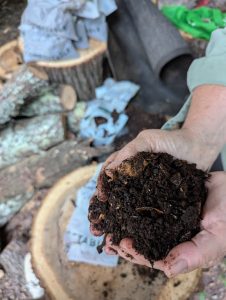
Kitchen Scraps and More!
